|
Regular Aikido Classes
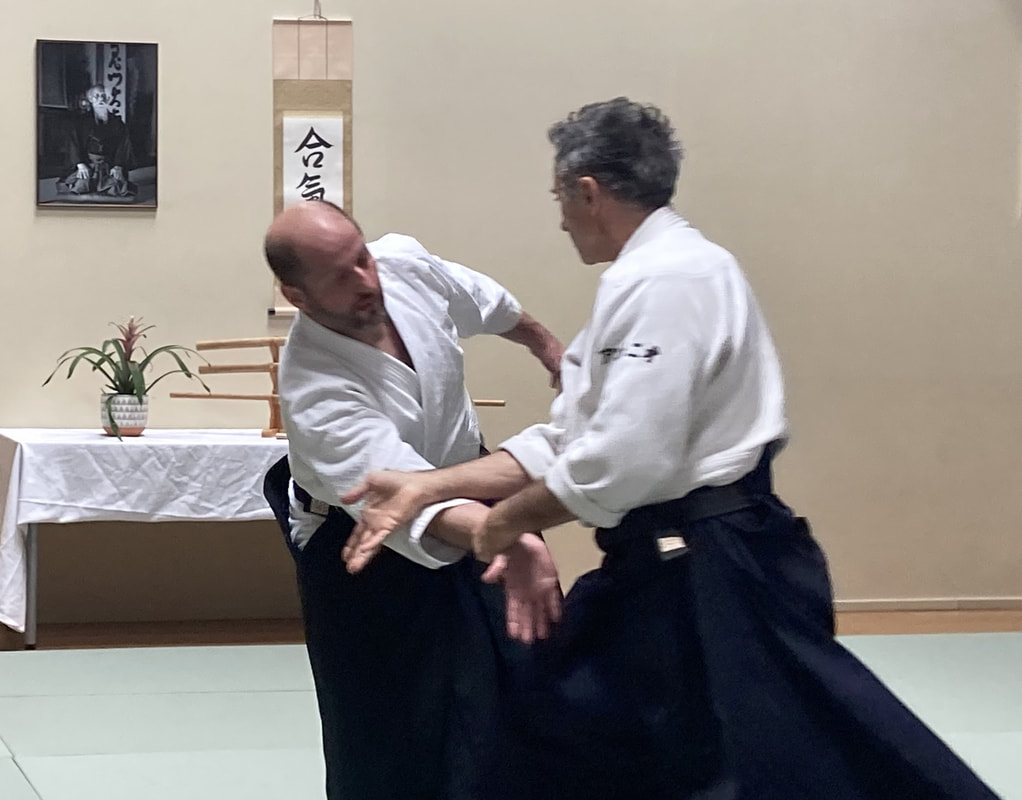
Aikido is a martial art and requires time to learn various physical movements, leg work, and body conditioning necessary to perform various techniques in a satisfactory, effective, and gratifying way. Aikido courses can be long term projects depending on individual commitments and aspirations. Typically, to enjoy gratifying and consistent results, Aikido students are advised to train at least once or twice a week. Classes are structured in a way that provide warm-up drills, flexibility exercises, cardiovascular activities, and body conditioning, as well as guided study of several unarmed and armed techniques. Classes are open to students of all level of expertise, progression is continually evaluated, and advancement promoted through tests scheduled and authorized by the instructor. |
|
|
REGULAR AIKIDO LESSONS FOR KIDS IN EVANSTON
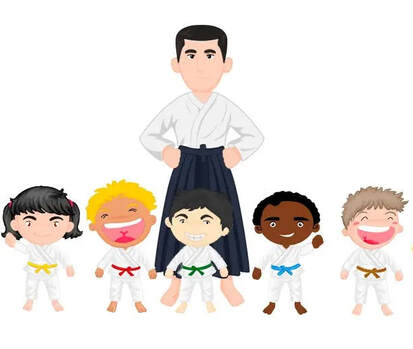
Aikido offers fun, exercise, and values to your child! Thursdays 6:00-7:00pm Do you want your child to feel safe and strong, even in challenging situations? With Aikido, your child can learn to set boundaries, express themselves confidently and deal with their emotions more consciously. Aikido offers not only a positive way to spend your free time, but also an opportunity for your child to develop discipline and respect. Confidence in one's own abilities grows through experiences of success and learning techniques. This is how we make your child strong for life. Through mindful training, your child can experience first-hand what it feels like to concentrate, reduce stress, and find emotional balance. Give your child the chance to develop their inner strength through Aikido. Annual Registration Fee: $50
(includes: student manual, dojo ID) Monthly Dues: $60 |
|
Parent & Child Aikido
Come and have fun learning Aikido with your child! Give yourself the chance to stay fit, move better, learn a new activity while enjoying precious time with your own child!
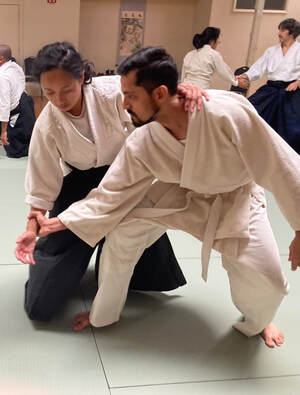
Adults are encouraged to join their children during regular Aikido classes for kids. This is a great opportunity to turn fun into a bonding and healthy experience for everyone. The Lakeshore Aikido Club offers a parent the opportunity to also learn and practice Aikido with his/her child for a special price. Upon registration both parent and child will receive a Aikido uniform each, a Lakeshore Aikido Club Student Manual, and the unique Lakeshore Aikido Club Student ID card! Any parent enrolled as a Parent & Child Aikido member will also have the choice to enroll in the adult class anytime as a special discounted fee. Do not miss on this opportunity and give yourself and your child a great time of fun, learning, and bonding experience.
Parent & Child Annual Registration (one time only): $50
(includes 2 uniforms, 1 LAC student manual, and 2 student dojo IDs)
Monthly Dues (once every month): $60
Adults are encouraged to join their children during regular Aikido classes for kids. This is a great opportunity to turn fun into a bonding and healthy experience for everyone. The Lakeshore Aikido Club offers a parent the opportunity to also learn and practice Aikido with his/her child for a special price. Upon registration both parent and child will receive a Aikido uniform each, a Lakeshore Aikido Club Student Manual, and the unique Lakeshore Aikido Club Student ID card! Any parent enrolled as a Parent & Child Aikido member will also have the choice to enroll in the adult class anytime as a special discounted fee. Do not miss on this opportunity and give yourself and your child a great time of fun, learning, and bonding experience.
Parent & Child Annual Registration (one time only): $50
(includes 2 uniforms, 1 LAC student manual, and 2 student dojo IDs)
Monthly Dues (once every month): $60
Aiki-Taiso
A Japanese Practice for Lifelong Health
000
Aiki-taiso is a Japanese expression that refers to “Aikido exercises”. Typically, Aiki-Taiso are Aikido-based workouts that serve as a warm-up, calisthenics, stretching, and stand-alone practice, aimed at developing core strength, flexibility, balance, and body awareness through movements that are performed alone and in couples. Aiki-taiso cultivates an integrated connection between body and mind through mindful movement, balanced posture, and coordinated action. As students develop greater body awareness and mental focus, they also improve their overall health, resilience, and sense of well-being.
The focus lies on natural postures, stretching, and the reduction of muscle tension, thus increaseing flexibility, balance, strength, and cardio-vescular health. Aiki-Taiso include several functional aspects of Aikido movements without engaging in the martial training. These includewhole-body movements, gentle rolls and falls, with low-impact exercises that train the body as a “coordinated unit,” improving functional strength, balance, and mobility for activities in daily life, enhancing both physical health and mental well-being, while promoting mindfulness and reducing physical stress.
A central feature of Aiki-Taiso is Makko-ho, a modern system of physical wellbeing that emerged in early 20th century Japan. It is structured around a group of basic stretching exercises that are meant to target both mental and physical fitness. Being deeply rooted in Japanese traditional culture, Makko-ho philosophy is grounded in the belief that the body naturally reflects our inner state through posture, and at the same time posture can influence how we feel. For this reason, the practice is meant to benefit not only our body but also the mind. Its goal is to strengthen body and spirit so the practitioner can face life with clarity and positivity. Makko-ho includes four exercises that are meant to help ordinary people when they’re stressed at work, feeling down, or lacking vital warmth.
000
Aiki-taiso is a Japanese expression that refers to “Aikido exercises”. Typically, Aiki-Taiso are Aikido-based workouts that serve as a warm-up, calisthenics, stretching, and stand-alone practice, aimed at developing core strength, flexibility, balance, and body awareness through movements that are performed alone and in couples. Aiki-taiso cultivates an integrated connection between body and mind through mindful movement, balanced posture, and coordinated action. As students develop greater body awareness and mental focus, they also improve their overall health, resilience, and sense of well-being.
The focus lies on natural postures, stretching, and the reduction of muscle tension, thus increaseing flexibility, balance, strength, and cardio-vescular health. Aiki-Taiso include several functional aspects of Aikido movements without engaging in the martial training. These includewhole-body movements, gentle rolls and falls, with low-impact exercises that train the body as a “coordinated unit,” improving functional strength, balance, and mobility for activities in daily life, enhancing both physical health and mental well-being, while promoting mindfulness and reducing physical stress.
A central feature of Aiki-Taiso is Makko-ho, a modern system of physical wellbeing that emerged in early 20th century Japan. It is structured around a group of basic stretching exercises that are meant to target both mental and physical fitness. Being deeply rooted in Japanese traditional culture, Makko-ho philosophy is grounded in the belief that the body naturally reflects our inner state through posture, and at the same time posture can influence how we feel. For this reason, the practice is meant to benefit not only our body but also the mind. Its goal is to strengthen body and spirit so the practitioner can face life with clarity and positivity. Makko-ho includes four exercises that are meant to help ordinary people when they’re stressed at work, feeling down, or lacking vital warmth.
Aiki-Taiso offers a wholesome and holistic approach to physical and mental wellbeing and is effective in improving balance, benefiting cardiovascular health, increasing flexibility and reducing pain, managing stress, supporting mental health, and promoting better sleep. Aiki Taiso feature physical movements and poses, controlled abdominal breathing, and mindfullness, thus making it a powerful tool for holistic wellness.
Lets Look at Some Major Benefits
Impoving balance and body-mind coordination. Aiki Taiso offers a set of Aikido-based cardio-based exercises, movements, postures, and legwork that improve general physical wellbeing and are proven to make our body work more efficiently. Through unified body movement originating from the center (hara/chushin), practitioners learn to move from a stable, grounded position and correct their overall posture. This awareness helps to build a strong core and foundation, making it easier to control one’s center of gravity and improve better balance. Properly executed these techniques don’t require strength, making Aiki-Taiso good for all body types and ages,including seniors.
Lets Look at Some Major Benefits
Impoving balance and body-mind coordination. Aiki Taiso offers a set of Aikido-based cardio-based exercises, movements, postures, and legwork that improve general physical wellbeing and are proven to make our body work more efficiently. Through unified body movement originating from the center (hara/chushin), practitioners learn to move from a stable, grounded position and correct their overall posture. This awareness helps to build a strong core and foundation, making it easier to control one’s center of gravity and improve better balance. Properly executed these techniques don’t require strength, making Aiki-Taiso good for all body types and ages,including seniors.
Benefiting cardiovascular health. This kind of training has been shown to support cardiovascular health by helping lower blood pressure and heart rate. Because a decline in aerobic endurance is often linked to heart and circulation problems, building and maintaining aerobic capacity is key to staying youthful and energetic. As a low-impact full-body workout, Aiki-Taiso not only boosts endurance and stamina but also enhances strength, flexibility, stability, and overall body awareness.
Increasing flexibility and reducing pain. As a gentle system of full-body stretching exercises, Aiki-Taiso and makko-ho combine movement (undo) with mindful abdominal breathing (fukushiki kokyu) to encourage balance and overall wellbeing by reconnecting with our center. The major targets are legs, upper and lower back, hips and pelvis, and inner thighs. By slowly strengthening the spine, stretching the muscles, tendons, and energy pathways of the body, the practice focuses on relaxation and steady progress rather than quickly pushing the body to its limits. Each movement is performed exclusively front-to-back, looking and moving straight forward without looking back or to the sides, and in harmony with the breath, allowing the body to ease naturally into position. This approach is highly effective at improving flexibility, which can make daily movements easier and reduce the risk of injury, falls, or loss of balance. This increased mobility can also help relieve chronic pain, release tension, restore balance, and enhance vitality.
Managing stress and supporting mental health. The psychosomatic benefits of Aiki-Taiso are wellknown to contribute to the reduction of the physical effects of stress on the body. By encouraging relaxation it helps reduce anxiety and improve overall mental health. Aiki-Taiso poses, movements, breathing, and mindfullness can be excellent tools in providing calming effects on the body and on the mind. Since the practice involves awareness of one’s body and abdominal breathing (harakokyu), it create a sense of calmness and alertness.
"Mokuso" - silent thinking - practice.
Promoting restfulness and better sleep. The practice of Aiki-Taiso helps to downshift from a state of excitement or high stress, allowing to re-enter one’s evening with calmness and positivity. Each practice session, therefore, ends with a few minutes of mokuso, or “silent mindful thinking”, which allows one to empty the mind, quiting one’s thoughts, and improving relaxation and self-awareness. Focusing on breath can lower our heart rate and activate the body’s relaxation response, thus it can interrupt the mental momentum of work-related thoughts and worries that often linger after hours, and calm the “mental chatter” that can interfere with sleep. It also eases the transition into a restful state, which can lead to better overall sleep quality.
Restoring Wellbeing. Therefore, as a discipline rooted in Japanese martial arts, physical wellbeing, as well as phylosophical traditions, Aiki-Taiso makes our body work more efficiently. As aging inesorably increases, so do our physical stiffness, instability, and propensity to falling and injuring ourselves. This practice helps restore balance and support the body’s natural cleansing processes, gently engaging nearly every muscle group. Aiki-Taiso’s work focuses on recentering our body awareness, while engaging hips, sacrum, spine, and the symmetrical rebalancing of the pelvis. Regular stretching not only improves flexibility but also relieves physical tension that often builds up in response to stress.
Cardiovascular exercise, another important element, increases the heart rate and stimulates oxygen flow, bringing more blood to the brain. This process releases endorphins that improve mood, increase energy, and counteract fatigue or sadness related to daily pressures.
With regular practice of Aiki-Taiso, the benefits are further enhanced. Posture naturally improves, muscles strengthen, and discomfort caused by long hours of inactivity may diminish. Over time, endurance, flexibility, and overall resilience of the body and mind are enhanced.
Cardiovascular exercise, another important element, increases the heart rate and stimulates oxygen flow, bringing more blood to the brain. This process releases endorphins that improve mood, increase energy, and counteract fatigue or sadness related to daily pressures.
With regular practice of Aiki-Taiso, the benefits are further enhanced. Posture naturally improves, muscles strengthen, and discomfort caused by long hours of inactivity may diminish. Over time, endurance, flexibility, and overall resilience of the body and mind are enhanced.
Our Aiki-Taiso classes provide an engaging introduction to this distinctive Japanese practice, allowing participants to experience its physical and mental benefits firsthand. Each 60-minute class follows a carefully designed progression of exercises that promote mobility, balance, relaxation, and body awareness within a supportive atmosphere of respect, community, and personal attention.
With more than forty years devoted to the study of East Asian cultures and the practice and teaching of Aikido, Antonio Terrone brings a rare combination of scholarly expertise and practical experience. His lifelong commitment to educating both young people and adults provides a strong foundation for guiding students toward lifelong health, mindful movement, and personal growth through Aiki-Taiso.l assistance.
Whether you are seeking greater flexibility, better posture, relief from everyday stress, or simply a healthier and more balanced lifestyle, Aiki-Taiso offers a welcoming path toward lasting well-being. Rooted in the timeless principles of Japanese movement culture, this unique practice nurtures both body and mind through mindful stretching, breathing, and purposeful movement. At Lakeshore Aikido Club, you will join a supportive community dedicated to lifelong health, personal growth, and inner balance. Take the first step today and discover how a few simple movements can become the foundation for a stronger, calmer, and more fulfilling life.
Aiki Kenjō Ryū
Discovering the Principles of Aiki and Budo Through Traditional Japanese Weapons
000
For many people, the words wooden sword, staff, or knife defense immediately evoke images of combat and ancient warriors. Yet within the Japanese tradition of martial arts (budo), weapons training—or Bukiwaza (武器技), literally “techniques with weapons”—serves a very different purpose. It is not about becoming proficient with swords or staffs, nor is it intended to recreate historical methods of warfare. Rather, weapons become extraordinary teaching tools that help practitioners develop the universal principles upon which all effective movement depends. Through the disciplined use of the bokken (wooden sword), kodachi (short sword), jō (staff), and tantō (wooden knife), students learn to move more efficiently, cultivate greater body awareness, and deepen their understanding of Aikido itself.
The Aiki Kenjo program offered at the Lakeshore Aikido Club presents these traditional training methods as a stand-alone educational course embedded in the principles of Aikido and influenced by historical developments linked to Iwama style and inspired by Kashima Shinryu techniques. It is designed not only for Aikido practitioners wishing to enrich their training and improve their skills with weapons, but also for adults with no previous martial arts experience who seek a unique form of mindful movement, physical conditioning, and practical self-development. Like our Aiki-Taisō program, Aiki Kenjo Ryu makes a traditional aspect of Japanese martial culture accessible to a wider community while remaining faithful to its original educational purpose.
One of the most remarkable characteristics of traditional Japanese weapons (buki) is that they reveal errors in movement immediately. Empty-hand techniques often allow practitioners to compensate for poor posture or inefficient movement. A weapon does not. The length of a staff or sword magnifies every mistake, making subtle imperfections instantly visible. Rather than becoming obstacles, these corrections become valuable opportunities for learning.
Perhaps the most fundamental lesson taught through weapons techniques is posture and alignment. Holding a weapon naturally encourages the practitioner to maintain an upright spine, relaxed shoulders, and a stable center of gravity. Leaning forward, collapsing the chest, or shifting weight improperly immediately disrupts the movement of the weapon. In this way, the weapon becomes a remarkably honest teacher, constantly guiding practitioners toward balanced and efficient posture.
Equally important is the development of ma-ai, the Japanese concept of distance and timing. Every interaction with a partner requires careful attention to space, rhythm, and opportunity. Unlike many forms of exercise that emphasize repetitive motion, Aiki Kenjo trains practitioners to perceive relationships—how close to stand, when to enter, when to yield, and when to move decisively. These lessons extend well beyond martial arts. Improved spatial awareness contributes to better balance, coordination, confidence, and overall body control in everyday life.
Weapons training also illuminates one of the central principles of Aikido: avoiding the attacker's line of force rather than confronting it directly. Through sword (bokken), staff (jo), short sword (kotachi), and tanto knife exercises, students quickly learn that meeting power with power is rarely effective. Instead, they discover how slight adjustments of angle, timing, and body position allow them to move safely away from the line of attack while maintaining stability and control. This principle of blending rather than colliding lies at the heart of Aikido and finds expression throughout Japanese martial traditions.
For many people, the words wooden sword, staff, or knife defense immediately evoke images of combat and ancient warriors. Yet within the Japanese tradition of martial arts (budo), weapons training—or Bukiwaza (武器技), literally “techniques with weapons”—serves a very different purpose. It is not about becoming proficient with swords or staffs, nor is it intended to recreate historical methods of warfare. Rather, weapons become extraordinary teaching tools that help practitioners develop the universal principles upon which all effective movement depends. Through the disciplined use of the bokken (wooden sword), kodachi (short sword), jō (staff), and tantō (wooden knife), students learn to move more efficiently, cultivate greater body awareness, and deepen their understanding of Aikido itself.
The Aiki Kenjo program offered at the Lakeshore Aikido Club presents these traditional training methods as a stand-alone educational course embedded in the principles of Aikido and influenced by historical developments linked to Iwama style and inspired by Kashima Shinryu techniques. It is designed not only for Aikido practitioners wishing to enrich their training and improve their skills with weapons, but also for adults with no previous martial arts experience who seek a unique form of mindful movement, physical conditioning, and practical self-development. Like our Aiki-Taisō program, Aiki Kenjo Ryu makes a traditional aspect of Japanese martial culture accessible to a wider community while remaining faithful to its original educational purpose.
One of the most remarkable characteristics of traditional Japanese weapons (buki) is that they reveal errors in movement immediately. Empty-hand techniques often allow practitioners to compensate for poor posture or inefficient movement. A weapon does not. The length of a staff or sword magnifies every mistake, making subtle imperfections instantly visible. Rather than becoming obstacles, these corrections become valuable opportunities for learning.
Perhaps the most fundamental lesson taught through weapons techniques is posture and alignment. Holding a weapon naturally encourages the practitioner to maintain an upright spine, relaxed shoulders, and a stable center of gravity. Leaning forward, collapsing the chest, or shifting weight improperly immediately disrupts the movement of the weapon. In this way, the weapon becomes a remarkably honest teacher, constantly guiding practitioners toward balanced and efficient posture.
Equally important is the development of ma-ai, the Japanese concept of distance and timing. Every interaction with a partner requires careful attention to space, rhythm, and opportunity. Unlike many forms of exercise that emphasize repetitive motion, Aiki Kenjo trains practitioners to perceive relationships—how close to stand, when to enter, when to yield, and when to move decisively. These lessons extend well beyond martial arts. Improved spatial awareness contributes to better balance, coordination, confidence, and overall body control in everyday life.
Weapons training also illuminates one of the central principles of Aikido: avoiding the attacker's line of force rather than confronting it directly. Through sword (bokken), staff (jo), short sword (kotachi), and tanto knife exercises, students quickly learn that meeting power with power is rarely effective. Instead, they discover how slight adjustments of angle, timing, and body position allow them to move safely away from the line of attack while maintaining stability and control. This principle of blending rather than colliding lies at the heart of Aikido and finds expression throughout Japanese martial traditions.
Another essential lesson concerns the relationship between movement and the body’s center, or hara. Beginners often attempt to manipulate the weapon primarily with their arms. Very quickly they discover that such movements become tiring, inefficient, and unstable. Proper wepon technique teaches practitioners to initiate movement from the hips and center of the body, allowing the entire body to move as a unified whole. As this coordination develops, students experience greater efficiency, smoother movement, and increased power without unnecessary muscular effort. These same qualities naturally improve empty-hand techniques and contribute to healthier movement in everyday activities.
Beyond physical development, Aiki Kenjo cultivates important mental qualities. Training with a partner using wooden weapons demands complete attention and mutual trust. Every movement requires awareness of one's partner, surroundings, and personal responsibility. This continuous attentiveness develops zanshin, often translated as “remaining mind” or sustained awareness. Rather than representing tension or anxiety, zanshin reflects a calm, alert presence that remains attentive before, during, and after every movement. In today’s world of constant distraction and fragmented attention, this quality of focused awareness has become increasingly valuable.
Solo practice also occupies an important place within Aiki Kenjo. Repetitive cutting exercises, known as suburi, provide an excellent form of physical conditioning while simultaneously refining posture, breathing, coordination, and concentration. Performed correctly, these movements strengthen the legs, core, shoulders, and back while encouraging relaxed, efficient movement. The rhythmic nature of suburi often produces a meditative quality, allowing practitioners to quiet the mind while cultivating precision and consistency.
Beyond physical development, Aiki Kenjo cultivates important mental qualities. Training with a partner using wooden weapons demands complete attention and mutual trust. Every movement requires awareness of one's partner, surroundings, and personal responsibility. This continuous attentiveness develops zanshin, often translated as “remaining mind” or sustained awareness. Rather than representing tension or anxiety, zanshin reflects a calm, alert presence that remains attentive before, during, and after every movement. In today’s world of constant distraction and fragmented attention, this quality of focused awareness has become increasingly valuable.
Solo practice also occupies an important place within Aiki Kenjo. Repetitive cutting exercises, known as suburi, provide an excellent form of physical conditioning while simultaneously refining posture, breathing, coordination, and concentration. Performed correctly, these movements strengthen the legs, core, shoulders, and back while encouraging relaxed, efficient movement. The rhythmic nature of suburi often produces a meditative quality, allowing practitioners to quiet the mind while cultivating precision and consistency.
Although Aiki Kenjo is rooted in classical Japanese martial traditions (kobudo), its lessons remain surprisingly relevant today. Training with the tantō introduces fundamental principles of awareness and personal safety rather than encouraging unrealistic fantasies of weapon combat. Similarly, staff exercises cultivate the ability to understand distance, leverage, and movement patterns that can later be applied to common objects such as walking sticks, umbrellas, or other improvised implements. The emphasis always remains on intelligent movement, avoidance of unnecessary conflict, and thoughtful self-protection rather than aggression.
Yet perhaps the greatest value of Aiki Kenjo lies neither in physical fitness nor in self-defense. Like all authentic expressions of budō, its ultimate purpose is education. The wooden sword, the staff, and the knife become instruments through which practitioners investigate posture, movement, perception, discipline, and self-awareness. They invite us to ask the same questions that guide all meaningful practice: Why do we move this way? How can we move more naturally? What does efficiency feel like? How do attention and relaxation coexist? These questions gradually transform training from the simple repetition of techniques into a lifelong process of discovery.
At the Lakeshore Aikido Club, Aiki Kenjo is therefore understood not as a course in historical weaponry, but as an exploration of the universal principles that underlie Aikido and many other Japanese martial traditions. It is a program where movement becomes education, where traditional weapons become teachers, and where every exercise offers an opportunity to cultivate greater balance, coordination, confidence, and mindful awareness.
Whether your goal is to complement your Aikido practice, improve your physical fitness, deepen your understanding of Japanese martial arts, or simply discover a unique and engaging form of lifelong movement, Aiki Kenjo Ryu offers an inspiring path of study. Through the timeless lessons of the bokken, jō, and tantō, participants discover that the true purpose of weapons training has never been to master the weapon itself, but to refine the person who holds it.
Yet perhaps the greatest value of Aiki Kenjo lies neither in physical fitness nor in self-defense. Like all authentic expressions of budō, its ultimate purpose is education. The wooden sword, the staff, and the knife become instruments through which practitioners investigate posture, movement, perception, discipline, and self-awareness. They invite us to ask the same questions that guide all meaningful practice: Why do we move this way? How can we move more naturally? What does efficiency feel like? How do attention and relaxation coexist? These questions gradually transform training from the simple repetition of techniques into a lifelong process of discovery.
At the Lakeshore Aikido Club, Aiki Kenjo is therefore understood not as a course in historical weaponry, but as an exploration of the universal principles that underlie Aikido and many other Japanese martial traditions. It is a program where movement becomes education, where traditional weapons become teachers, and where every exercise offers an opportunity to cultivate greater balance, coordination, confidence, and mindful awareness.
Whether your goal is to complement your Aikido practice, improve your physical fitness, deepen your understanding of Japanese martial arts, or simply discover a unique and engaging form of lifelong movement, Aiki Kenjo Ryu offers an inspiring path of study. Through the timeless lessons of the bokken, jō, and tantō, participants discover that the true purpose of weapons training has never been to master the weapon itself, but to refine the person who holds it.
Curriculum
The Aiki Kenjo Ryu curriculum develops integrated weapons practice through posture, footwork, taisabaki, and foundational suburi, progressing to formal kata and paired training. Students study aiki-ken, aiki-jo, tanto-dori, kumi-tachi, ken-jo-kodachi no kata, and kumi-jo, cultivating precision, coordination, distance, timing, centered movement, awareness, and a deeper understanding of Aikido principles through traditional weapons practice.
Benefits
Aikido-inspired Buki Waza (weapons training) has numerous elements like the jo (staff), bokken (wooden sword), kodachi (short sword) and tanto (knife) that build universally applicable martial skills, and can therefore attract a wide demographic seeking fitness, coordination, and functional self-defense. For instancee, in terms of fitness and solo-practice, weapon suburi (solo cuts and strikes) provide an intense core and upper-body workout, while tanto dori (knife defense) and staff work translate well into learning how to manage improvised weapons (like sticks or blunt objects) in modern self-defense contexts.
Practicing Aiki Kenjo without ego-driven metrics, like grading or sparring, transforms the martial art into a lifelong, meditative study of body mechanics and conflict resolution. This pressure-free approach builds profound physical longevity, spatial awareness, and deep internal calm without the risk of injury associated with competitive combat. Integrating the bokken (wooden sword) and jo (staff) creates an environment where fundamental principles are isolated and refined without the complicating factors of a resisting human partner. Without the objective of “winning” or “scoring points,” training shifts toward deep, introspective exploration. Additionally, eradicating rank allows practitioners to break free from ego and perform without the pressure of testing or demonstrating external progress. Students learn for the intrinsic joy of learning and continuous self-improvement, and partners treat practice (keiko) as a sincere, respectful exchange rather than a battle to display superiority.
About the Instructor
The Bukiwaza program within the Aiki Kenjo Ryu is directed by Antonio Terrone, a lifelong student and instructor of Aikido with more than forty years of martial arts experience. His teaching reflects a unique combination of academic scholarship and decades of dedicated practice, offering students a rare opportunity to explore Japanese martial traditions within their broader cultural, historical, and philosophical context.
Professionally, Antonio Terrone is a specialist in East Asian languages, religions, and cultures and serves as a associate professor of instruction in East Asian Studies at Northwestern University. His research and teaching have long focused on the intellectual, religious, and cultural traditions of China, Tibet, and Japan, bringing a depth of understanding that enriches every aspect of his martial arts instruction. One of his courses is dedicated to the exploration of “Japanese Martial Arts Culture and Philosophy.”
His Aikido training has been shaped by years of apprenticeship under internationally renowned instructors and predominantly Christian Tissier Shihan, one of world’s foremost Aikido teachers and a direct student of the late Seigo Yamaguchi Shihan at the Aikikai Hombu Dojo in Tokyo. The Aiki-ken (wooden sword) and Aiki-jō (wooden staff) curriculum taught in this program follows the weapons tradition transmitted through Tissier Shihan’s lineage, itself informed by the teachings of several distinguished Japanese Aikido masters.
Rather than presenting weapons simply as martial implements, Antonio Terrone sensei approaches Aiki Kenjo as a sophisticated educational practice through which students cultivate posture, balance, coordination, timing, concentration, and mindful movement. His goal is not merely to teach techniques, but to help participants understand the universal principles that underlie Japanese martial arts while fostering lifelong physical well-being, personal growth, and a deeper appreciation of Japan's rich cultural heritage.
Benefits
Aikido-inspired Buki Waza (weapons training) has numerous elements like the jo (staff), bokken (wooden sword), kodachi (short sword) and tanto (knife) that build universally applicable martial skills, and can therefore attract a wide demographic seeking fitness, coordination, and functional self-defense. For instancee, in terms of fitness and solo-practice, weapon suburi (solo cuts and strikes) provide an intense core and upper-body workout, while tanto dori (knife defense) and staff work translate well into learning how to manage improvised weapons (like sticks or blunt objects) in modern self-defense contexts.
Practicing Aiki Kenjo without ego-driven metrics, like grading or sparring, transforms the martial art into a lifelong, meditative study of body mechanics and conflict resolution. This pressure-free approach builds profound physical longevity, spatial awareness, and deep internal calm without the risk of injury associated with competitive combat. Integrating the bokken (wooden sword) and jo (staff) creates an environment where fundamental principles are isolated and refined without the complicating factors of a resisting human partner. Without the objective of “winning” or “scoring points,” training shifts toward deep, introspective exploration. Additionally, eradicating rank allows practitioners to break free from ego and perform without the pressure of testing or demonstrating external progress. Students learn for the intrinsic joy of learning and continuous self-improvement, and partners treat practice (keiko) as a sincere, respectful exchange rather than a battle to display superiority.
About the Instructor
The Bukiwaza program within the Aiki Kenjo Ryu is directed by Antonio Terrone, a lifelong student and instructor of Aikido with more than forty years of martial arts experience. His teaching reflects a unique combination of academic scholarship and decades of dedicated practice, offering students a rare opportunity to explore Japanese martial traditions within their broader cultural, historical, and philosophical context.
Professionally, Antonio Terrone is a specialist in East Asian languages, religions, and cultures and serves as a associate professor of instruction in East Asian Studies at Northwestern University. His research and teaching have long focused on the intellectual, religious, and cultural traditions of China, Tibet, and Japan, bringing a depth of understanding that enriches every aspect of his martial arts instruction. One of his courses is dedicated to the exploration of “Japanese Martial Arts Culture and Philosophy.”
His Aikido training has been shaped by years of apprenticeship under internationally renowned instructors and predominantly Christian Tissier Shihan, one of world’s foremost Aikido teachers and a direct student of the late Seigo Yamaguchi Shihan at the Aikikai Hombu Dojo in Tokyo. The Aiki-ken (wooden sword) and Aiki-jō (wooden staff) curriculum taught in this program follows the weapons tradition transmitted through Tissier Shihan’s lineage, itself informed by the teachings of several distinguished Japanese Aikido masters.
Rather than presenting weapons simply as martial implements, Antonio Terrone sensei approaches Aiki Kenjo as a sophisticated educational practice through which students cultivate posture, balance, coordination, timing, concentration, and mindful movement. His goal is not merely to teach techniques, but to help participants understand the universal principles that underlie Japanese martial arts while fostering lifelong physical well-being, personal growth, and a deeper appreciation of Japan's rich cultural heritage.